welcome to our company
 Get A Quote

 Send Inquiry
Drying Oven
Price 320000 INR/ Unit
MOQ : 1 Unit
Drying Oven Specification
- Type
- Drying Oven
- Material
- Mild Steel
- Computerized
- No
- Automatic Grade
- Semi-Automatic
- Control System
- Human Machine Interface
- Drive Type
- Electric
- Voltage
- 220-440 Volt (v)
- Color
- Blue
- Warranty
- 1 Year
- Surface Finish
- Polished
Drying Oven Trade Information
- Minimum Order Quantity
- 1 Unit
- Payment Terms
- Cash Against Delivery (CAD), Cash in Advance (CID), Cheque
- Delivery Time
- 3-4 Week
- Main Export Market(s)
- Asia
- Main Domestic Market
- All India
About Drying Oven
We are an acclaimed name engaged in offering for our precious clients a superior quality range of Batch Oven. These ovens are manufactured by our industry-specialists using high ranking basic material in observance with the quality standards. Under the command of quality inspectors, these industrial ovens are inspected strictly to ensure their excellence. Moreover, our clients can purchase these industrial ovens from us at industrial leading rates.
Our Ovens are designed for optimal consumption of fuel with a uniform temperature throughout the Oven. Various sensors and user friendly valves are given to ensure safety, efficiency of Oven and quality of powder coating. Oven can be of various types like Diesel fired, Gas fired or electrically equipped.
Diesel/Gas Fired Ovens:
An efficient Heat Exchanger is used to transfer heat from the burner (burning the fuel) in the heat cabin to the Oven through ducts for a uniform temperature. They are designed for both Batch plants and conveyorised plants. Batch plant ovens have doors at both side and are provided with appropriate material handling equipment for eg. Ground rails for smooth trolley movement or a small overhead conveyor system.
Features:
- Low maintenance
- High performance
- Industry approved design
- Safe limits of Insulations
- Multi point temp monitoring
- Inside high temp resistant paint
| Blower Type | Backward curved dynamically balanced |
| Blower Capacity (CMH) | 2500 / 3500 / 5500 / 7500 / 9500 |
| Motor Capacity (HP) | 1 / 2 / 3 / 5 / 7.5 |
| Maximum Designed Temp (C) | 80 / 150 / 200 / 250 |
| Curing/Drying Temp (C) | 70 / 140 / 180 / 210 |
| Heating Source (Hot Air Generator (HAG)) | Electric / Gas (LPG/PNG) / LDO (Diesel) |
| Thermal Rating (Lacs Kcal/hr) | 0.5 / 0.8 / 1 / 1.5 / 2 /2.5 /3 |
| Material of Const. (mm) - HAG | SS 316 , SS 304 , SS 202 |
| Insulation Thickness (mm) | 50 / 100 / 125 / 150 / 200 |
| Insulation Type | Glasswool / |
| Finishing (Inside) | High Temp. Silver Paint |
| Finishing (Outside) | Bright Silver Paint |
| Control Panel c/w Wiring | Included |
Versatile Heating Choices
This drying oven offers flexibility with gas, diesel, or electrical heating methods. Users can choose the most suitable power source depending on availability and cost, ensuring uninterrupted operation and adaptability across various industrial applications in different regions.
Inline Design for High Efficiency
Designed as an inline model, the oven provides continuous material processing, which enhances workflow efficiency by minimizing manual handling. The painted, durable exterior ensures a long life span while maintaining safety and cleanliness in industrial environments.
FAQ's of Drying Oven:
Q: How does the inline drying oven operate using different heating methods?
A: The inline drying oven can operate with gas, diesel, or electrical heating sources. The user selects the preferred power source based on facility infrastructure and fuel availability. Gas is the primary power option, offering rapid and consistent heat delivery suitable for continuous processing.Q: What are the primary benefits of using a gas-powered inline drying oven?
A: A gas-powered inline drying oven enables uniform and efficient drying, lowers operational costs due to fuel efficiency, and supports consistent production output. The continuous inline process also minimizes manual labor and improves overall productivity.Q: When should this inline drying oven be used in industrial operations?
A: This oven is best utilized during the drying phase of industrial production lines, particularly where large quantities of material require continuous drying. It is ideal for manufacturing environments needing reliable and high-throughput drying capabilities.Q: Where can this drying oven be installed, and what industries benefit from it?
A: The oven can be installed in production plants, manufacturing units, or facilities that demand large-scale drying. Industries such as textiles, ceramics, chemicals, and food processing can benefit from its efficient and adaptable design.Q: What is the process for operating and maintaining this drying oven?
A: Operating the oven involves selecting the power source, setting the desired temperature, and ensuring materials move through the inline chamber. Routine maintenance includes regular cleaning, inspection of heating elements, and checking the painted finish for durability.Q: How does the surface finish contribute to the oven's longevity and safety?
A: The painted surface finish protects against corrosion and wear, promoting durability even in demanding industrial environments. It also adds an additional layer of safety by making the oven easier to clean and maintain.Q: What usage advantages does the inline model offer compared to batch-type ovens?
A: The inline model allows for continuous drying, which reduces downtime and increases throughput compared to batch ovens. This results in higher efficiency, lower labor requirements, and more consistent end-product quality.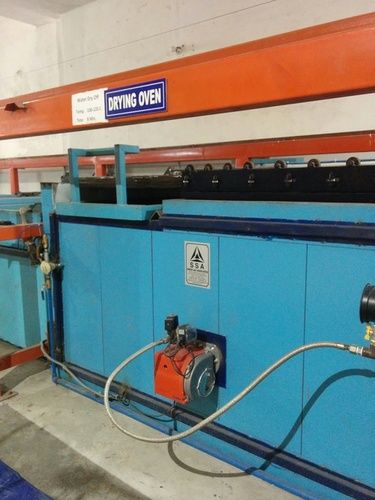
Tell us about your requirement

Price:
Quantity
Select Unit
- 50
- 100
- 200
- 250
- 500
- 1000+
Additional detail
Mobile number
Email

More Products in Industrial Ovens Category
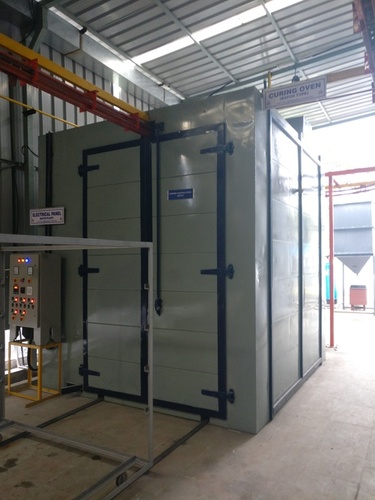
Batch Type Curing Oven
Price 345000 INR / Unit
Minimum Order Quantity : 1 Unit
Features : High Durability, Uniform Heating, Energy Efficient
Control System : Other, PID Based Digital Temperature Controller
Automatic Grade : SemiAutomatic
Computerized : No
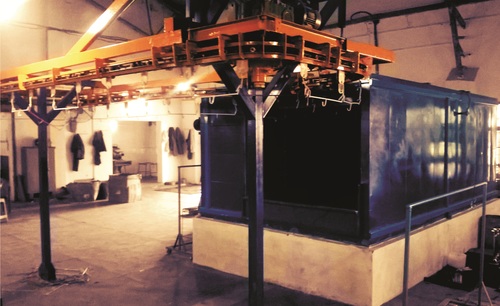
Ground Conveyorised oven
Price 550000 INR / Unit
Minimum Order Quantity : 1 Unit
Features : High accuracy
Control System : Human Machine Interface
Automatic Grade : Automatic
Computerized : No

SHREE SAI ASSOCIATES
GST : 06AAIHK2759L1ZT
Contact Us

- 8, Indira Industrial Complex, Behind L R Foods, Near SRS Residency, Sec-87, Tigaon Road,Faridabad - 121002, Haryana, India

- Mr Sukrit Jain (Proprietor)
- Mobile :07971549208
- Direct No. :+918376039776

 Send Inquiry
 Send SMS
SHREE SAI ASSOCIATES
All Rights Reserved.(Terms of Use)
Developed and Managed by Infocom Network Private Limited.
Developed and Managed by Infocom Network Private Limited.
